
Cold water storage tanks are still found in many commercial, residential, healthcare and older buildings throughout the UK.
When they are correctly designed, maintained and monitored, they can operate without causing significant concern. However, where temperatures rise, water turnover is poor or the tank condition deteriorates, they can become an important source of Legionella risk within a domestic water system.
So what should responsible persons and facilities managers be looking out for?
What Does a Cold Water Storage Tank Do?
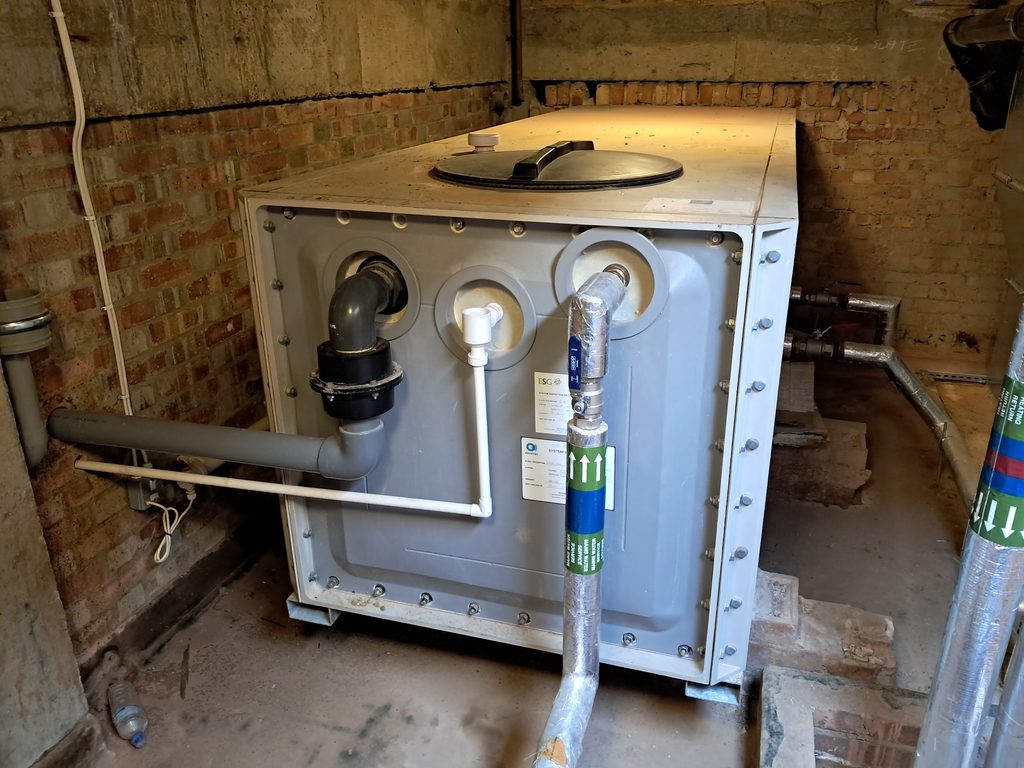
A cold water storage tank receives water from the incoming mains supply and stores it before distributing it to outlets or other parts of the building’s water system.
They are commonly found in:
- Roof voids and roof plant areas
- Dedicated plant rooms
- Service areas and risers
- Older commercial and residential buildings
Storage tanks may be required where the incoming mains supply cannot provide sufficient pressure or flow for the building.
Although storage is sometimes necessary, holding water within a tank introduces additional factors that need to be properly controlled.
Why Can Cold Water Storage Tanks Increase Legionella Risk?
Legionella bacteria are more likely to multiply where water conditions become favourable.
For cold water systems, one of the most important controls is temperature. Stored cold water should be maintained at a sufficiently low temperature, with 20°C commonly used as the key control point for cold water systems.
Where stored water begins to warm above this level, particularly alongside poor turnover or contamination, the conditions can become increasingly favourable for microbial growth.
Other common risk factors include:
- Stagnant or slow-moving water
- Excessive water storage
- Sediment within the tank
- Scale and corrosion
- Biofilm development
- Poor tank insulation
- Inadequate maintenance
- Contamination entering through poorly protected openings
A tank does not automatically become a serious Legionella risk simply because it stores water. Problems usually develop when several of these factors occur together.
Common Cold Water Tank Problems Found During Legionella Risk Assessments
Elevated Cold Water Temperatures
One of the most frequent findings during a Legionella risk assessment is stored cold water exceeding the recommended control temperature.
This can occur where tanks are located within warm plant rooms or roof spaces, particularly during warmer weather.
Heat can also be transferred from:
- Hot water pipework
- Heating services
- Boilers and calorifiers
- Poorly ventilated plant areas
Cold water pipework and tanks should therefore be appropriately located and insulated to minimise unwanted heat gain.
A tank consistently storing water above 20°C should be investigated rather than treated as a normal condition.
Poor Internal Tank Condition
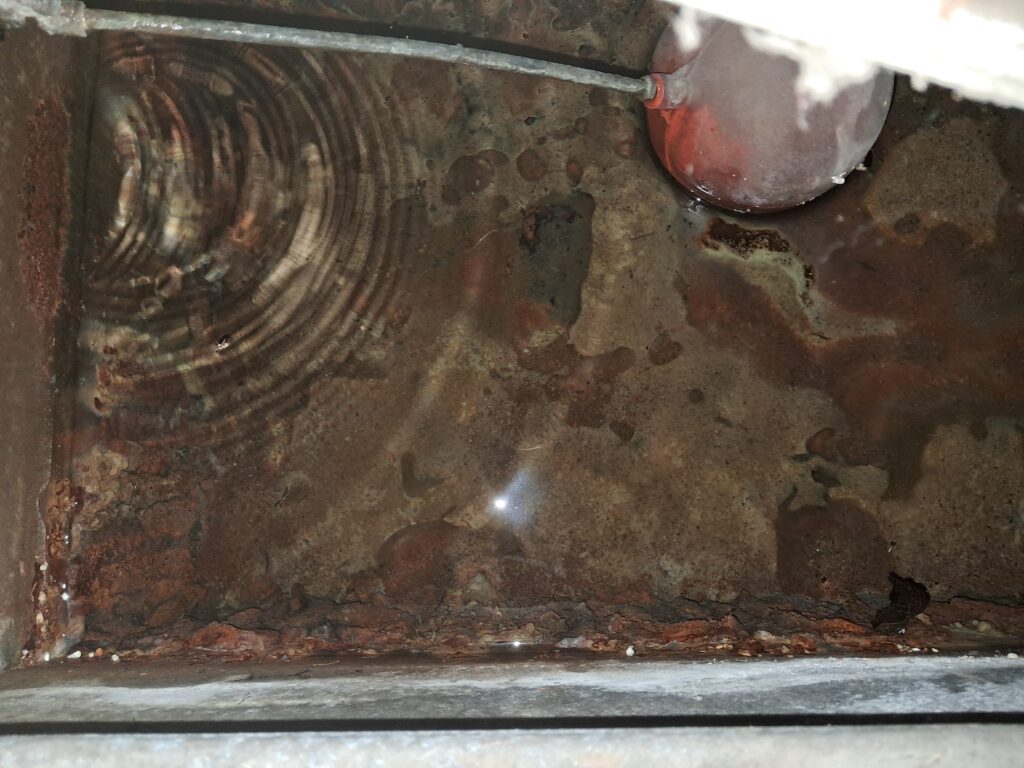
The internal condition of a cold water storage tank can significantly affect water quality.
During inspections, common defects include:
- Sediment deposits
- Corrosion
- Scale
- Organic contamination
- Deteriorated tank surfaces
- Visible debris
Sediment and deposits can provide nutrients and surfaces on which biofilm can develop.
Where significant contamination is identified, cleaning and disinfection may be necessary following an appropriate assessment of the system.
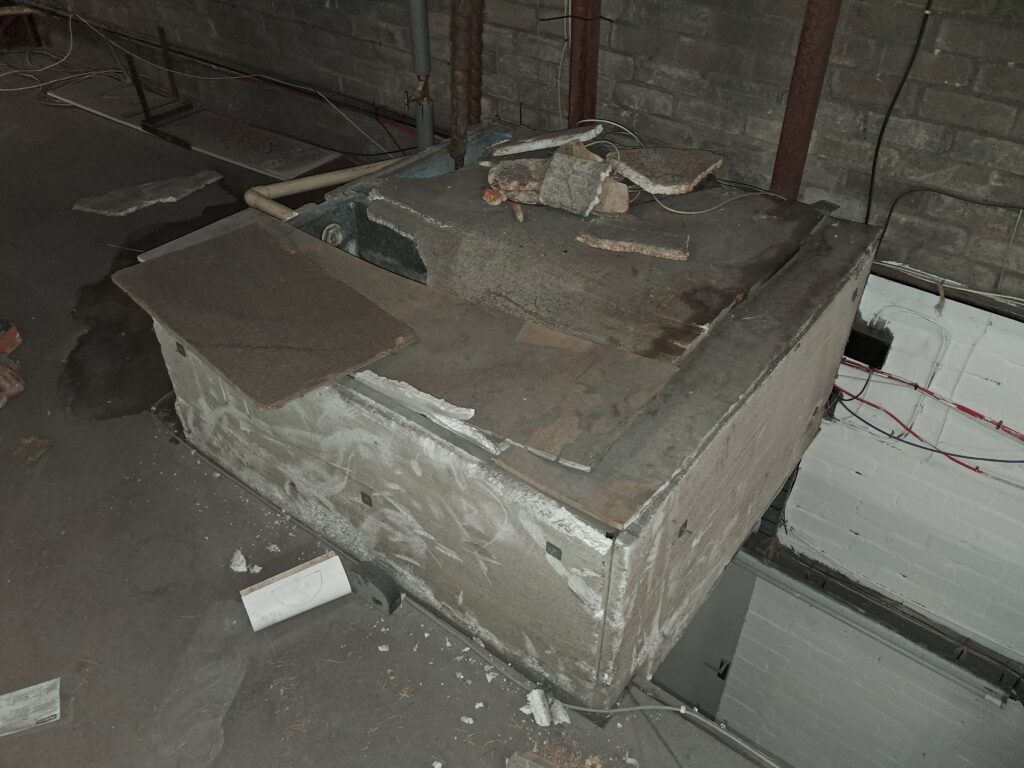
Missing or Damaged Tank Lids
Cold water storage tanks should be protected against external contamination.
A properly fitted lid helps prevent dust, insects, birds, rodents and other debris from entering the stored water.
Common defects include:
- Missing lids
- Damaged lids
- Poorly fitting covers
- Open gaps around pipe entries
- Missing or damaged insect screens
Warning pipes, overflows and vents should also be suitably screened where required.
A tank may appear satisfactory internally but still remain vulnerable to contamination if these protections are inadequate.
Oversized Tanks and Poor Water Turnover
Another common problem is excessive storage capacity.
A tank may have been designed for a building with a much greater water demand than currently exists. Changes in occupancy, refurbishment or the removal of facilities can all reduce daily water usage.
When storage capacity is too high in relation to demand, water may remain in the tank for extended periods.
Poor turnover can contribute to:
- Stagnation
- Reduced disinfectant residual
- Increased water temperature
- Sediment accumulation
- Biofilm formation
Where practical, tank capacity should be appropriate for actual building demand.
In some circumstances, reducing the stored volume or removing unnecessary storage altogether can significantly improve water quality.
Lack of Routine Inspection and Monitoring
Even a well-designed cold water storage tank can deteriorate if it is not included within the site’s water hygiene management programme.
Typical management failures include:
- No routine temperature checks
- No tank condition inspections
- No maintenance records
- No documented cleaning history
- No monitoring of water turnover
These issues are particularly common where older tanks have effectively been forgotten within roof spaces or remote plant areas.
A suitable written scheme of control should clearly identify the required monitoring and maintenance tasks.
When Does a Cold Water Storage Tank Become a Significant Legionella Risk?
The level of risk should always be considered as part of the wider water system, but concern increases where several adverse conditions occur together.
Examples include:
- Stored water repeatedly exceeding 20°C
- Poor or unknown water turnover
- Significant sediment or contamination
- Corrosion or deterioration of the tank
- Inadequate lids, screens or protection
- Warm surrounding conditions
- Little or no evidence of routine monitoring
- Redundant or oversized storage capacity
Where several of these conditions are present, simply continuing to monitor the tank may not be sufficient.
Corrective action should be considered.
How Can the Risk Be Reduced?
Many cold water storage tank issues can be managed through relatively straightforward improvements.
Control measures may include:
- Maintaining cold water temperatures below 20°C where reasonably practicable
- Improving tank and pipework insulation
- Protecting tanks from external heat sources
- Ensuring lids fit correctly
- Providing suitable screens to vents and overflows
- Removing sediment and contamination
- Maintaining good water turnover
- Reviewing excessive storage capacity
- Carrying out routine inspections
- Keeping accurate monitoring and maintenance records
Where a tank is no longer required, removal may provide a better long-term solution than continuing to maintain unnecessary stored water.
This may be particularly appropriate where outlets can be supplied directly from the mains or where the system can be redesigned to reduce storage.
Should Cold Water Storage Tanks Be Removed?
Not necessarily.
Cold water storage tanks continue to serve an important purpose in many buildings and can operate safely when properly managed.
However, retaining unnecessary storage creates additional maintenance requirements and potential areas of stagnation.
During a Legionella risk assessment, consideration should therefore be given to whether the tank is:
- Still required
- Correctly sized
- In regular use
- Adequately protected
- Properly maintained
Removing redundant assets is often one of the most effective ways of simplifying a water system and reducing long-term Legionella risk.
Final Thoughts
Cold water storage tanks are not inherently unsafe, but they should never be ignored.
Temperature, turnover, cleanliness and tank condition all influence the potential for Legionella growth.
Problems are often preventable through good system design, routine inspection and effective water hygiene management.
A suitable Legionella risk assessment should identify whether storage tanks are operating as intended, whether existing controls are effective and whether improvements are required.
Need Help Assessing Your Cold Water Storage Tanks?
Source Water Compliance provides professional Legionella risk assessments and water hygiene support for commercial and managed premises.
If you are unsure about the condition of your cold water storage tanks, water temperatures or current control measures, an independent assessment can help identify potential issues before they develop into more significant problems.
Contact Source Water Compliance to discuss your site or arrange a Legionella risk assessment.
Leave a Reply