
Thermostatic Mixing Valves (TMVs) play an important role in modern water systems. They are designed to reduce the risk of scalding by blending hot and cold water to provide a controlled outlet temperature.
They are particularly important in higher-risk environments such as healthcare premises, care homes, schools, hotels and public facilities, where vulnerable users may be more susceptible to scalding.
However, while TMVs provide an important safety function, they can also introduce additional water hygiene and Legionella risks if they are incorrectly installed, poorly maintained or inadequately monitored.
Why Are TMVs Used?
Hot water systems are normally stored and distributed at temperatures sufficiently high to help control the growth of Legionella bacteria.
As a general principle, hot water should be stored at approximately 60°C and distributed so that temperatures of at least 50°C can be achieved at outlets within one minute, where appropriate.
While these temperatures are beneficial from a Legionella control perspective, they can present a scalding risk, particularly to children, elderly people and other vulnerable users.
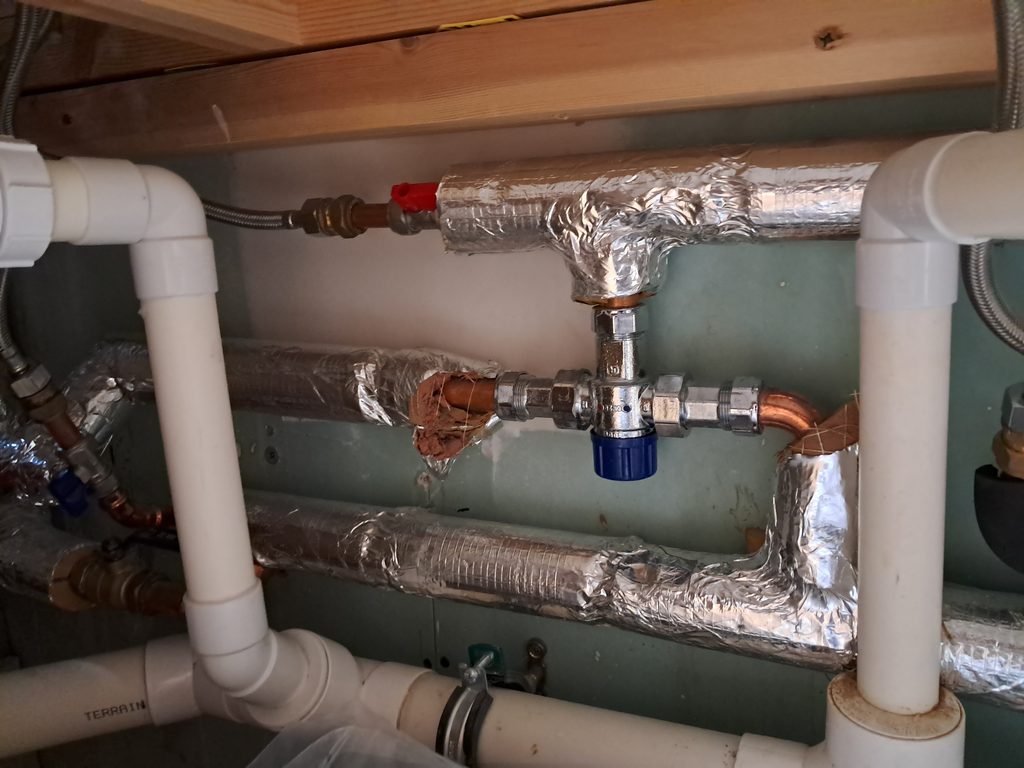
TMVs help manage this risk by blending hot and cold water close to the point of use. This allows the main hot water system to operate at temperatures suitable for Legionella control while providing a safer temperature to the user.
Where Can TMVs Create Problems?
TMVs themselves are not inherently a Legionella problem. The risk usually arises from the way they are installed, used and maintained.
1. Tepid Water Conditions
A TMV mixes hot and cold water to produce a lower outlet temperature, commonly somewhere within the temperature range in which Legionella bacteria may survive and multiply.
If mixed water is allowed to remain stagnant within the valve, downstream pipework or the outlet itself, conditions can become more favourable for bacterial growth.
For this reason, the length and volume of mixed-water pipework downstream of a TMV should be kept to a minimum wherever practicable.
2. Low-Use Outlets
Low-use outlets are a common source of water hygiene problems.
Showers, taps and other facilities that are used infrequently can allow water to remain stagnant within the associated pipework and TMV for extended periods.
Examples may include:
- Spare hotel bedrooms
- Seasonal facilities
- Vacant office areas
- Infrequently used clinical rooms
- Accessible toilets with low footfall
Where outlets are identified as being infrequently used, an appropriate flushing regime should form part of the site’s water management programme.
3. Scale, Debris and Biofilm
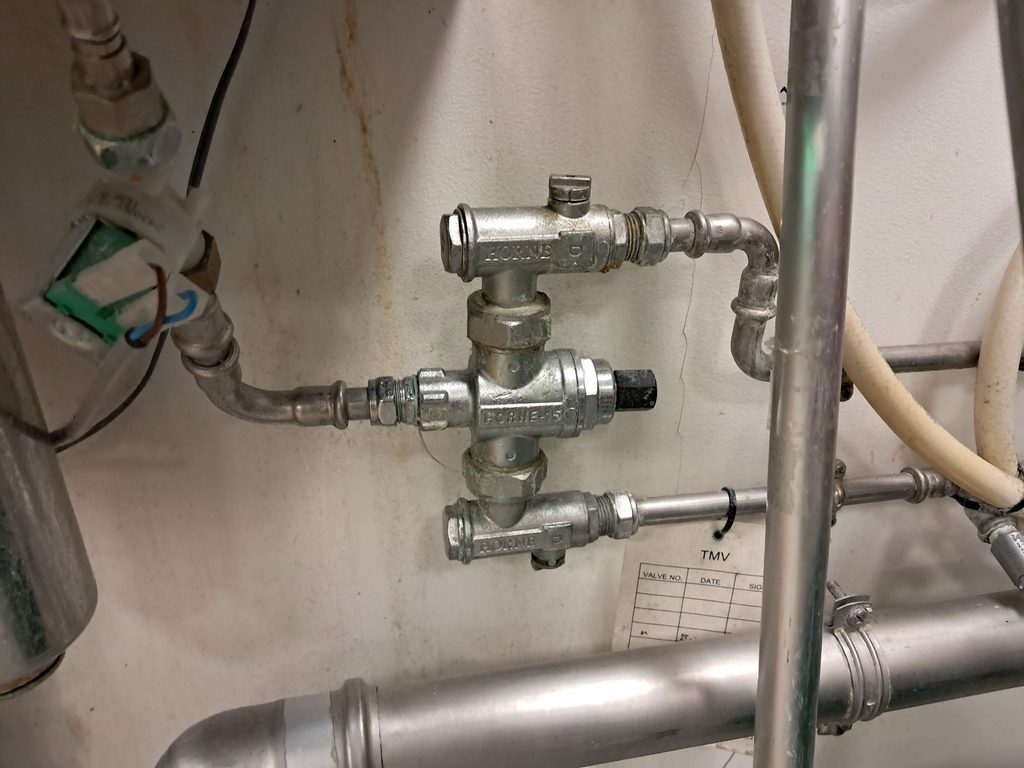
TMVs contain internal components including strainers, non-return valves and thermostatic elements.
Over time, these components can become affected by scale, sediment and other debris. Where maintenance is inadequate, this may impair valve performance and create surfaces on which biofilm can develop.
Routine inspection, cleaning, servicing and descaling are therefore important parts of TMV management.
4. Incorrect Installation
Poor installation can significantly increase the risks associated with a TMV.
Problems may include:
- Excessive lengths of mixed-water pipework
- Oversized pipework
- Poorly positioned valves
- Inaccessible valves that cannot easily be maintained
- Redundant pipework remaining connected to the system
- TMVs serving outlets that no longer require them
Changes in building use can also result in TMVs being left in place long after their original purpose has disappeared.
These situations can create unnecessary water retention, stagnation and, in some cases, hidden dead legs.
Good Practice for TMV Management
TMVs should be considered as part of the wider water safety and Legionella control programme rather than treated as isolated components.
Good management may include:
- Regular temperature monitoring
- Routine inspection and servicing
- Cleaning and descaling where necessary
- Checking strainers and non-return valves
- Flushing infrequently used outlets
- Removing redundant pipework and unused valves
- Ensuring valves remain accessible for inspection and maintenance
- Reviewing whether individual TMVs remain necessary
- Maintaining suitable records of inspection and servicing
In higher-risk environments, particularly healthcare premises, additional requirements may apply regarding valve performance, fail-safe testing, maintenance frequencies and temperature monitoring.
Balancing Scalding Risk and Legionella Risk
The important point is that TMVs are not the problem. In many buildings they are an essential safety measure.
Problems arise when TMVs are installed without sufficient consideration being given to future maintenance, water usage patterns, pipework configuration and Legionella control.
A well-designed and properly managed water system should balance four key considerations:
- Scald prevention
- Legionella and water hygiene control
- Practical usability
- Safe access for ongoing inspection and maintenance
Neither scalding risk nor Legionella risk should be considered in isolation.
Final Thoughts
Thermostatic Mixing Valves are sometimes overlooked during routine water system inspections, yet they can be a critical component in managing both user safety and water hygiene.
Their presence should therefore be considered during Legionella risk assessments, routine monitoring and reviews of water system design.
Correct installation, regular maintenance and ongoing review are essential to ensure TMVs continue to protect building users without creating unnecessary areas of stagnation or favourable conditions for bacterial growth.
For organisations responsible for complex water systems, understanding the relationship between TMVs, scald prevention and Legionella control is an important part of effective water safety management.
Leave a Reply